
A step forward in Europe in fast transportation
On September 10, 2025, at the Veendam test center in the Netherlands, Hardt Hyperloop conducted a test that represents a “milestone” for the use of technology related to the world of travel and mobility.
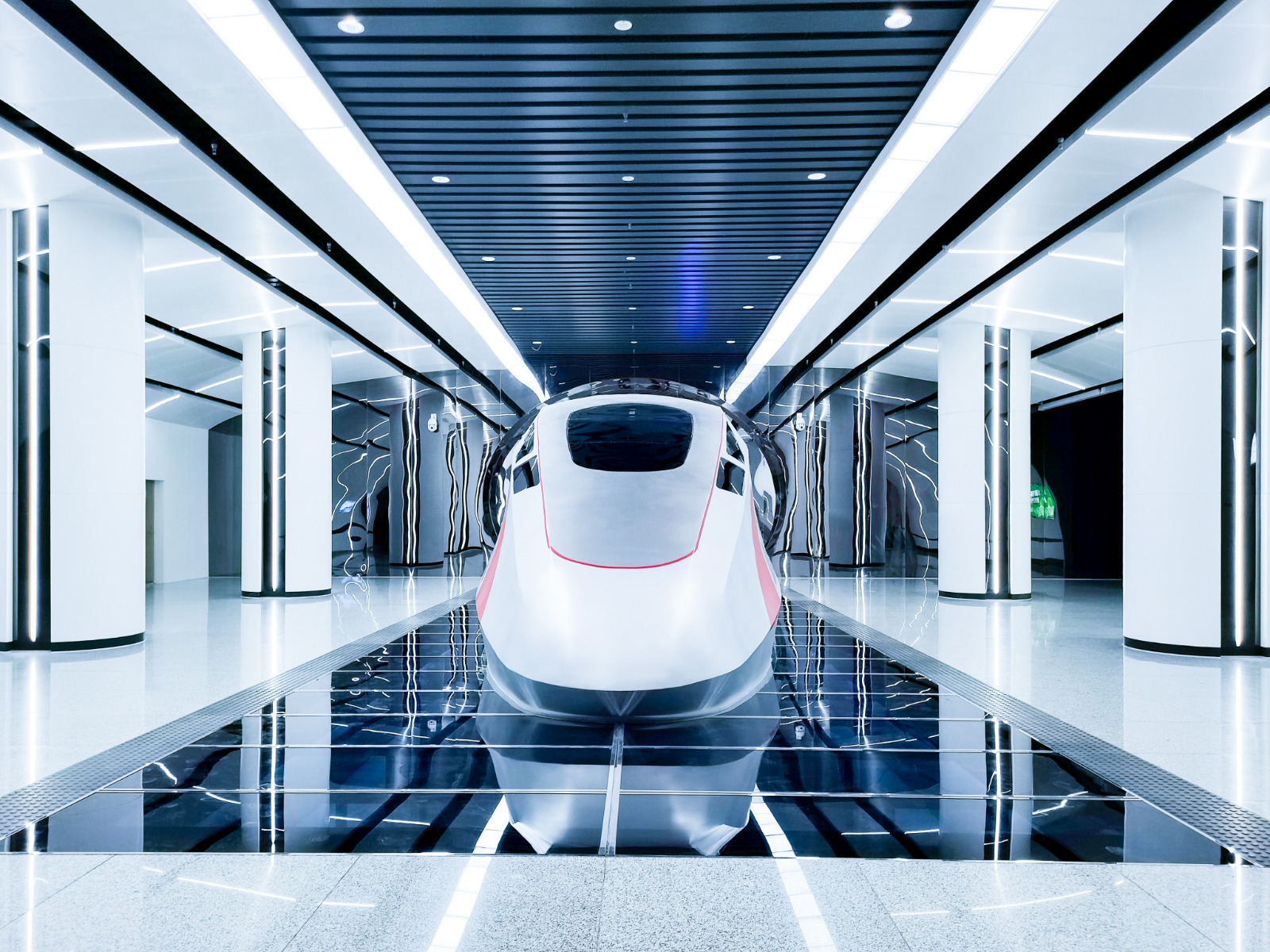
The system is based on a sealed, low-pressure tube, almost a vacuum, inside which capsules (pods) travel at very high speeds, testing a futuristic model of transport for passengers and goods, approaching the speeds of air transport.
The experimental vehicle reached 85 km/h, exceeding the design speed of 80 km/h, and achieved an acceleration of 0.3G in the first 140 meters.
A test that focuses on the network, not records
However, the most interesting point lies elsewhere, beyond the simple data obtained. It is the lane change performed while the vehicle was in motion, presented as a “first” in Europe on a test track.
In a closed, high-speed system, being able to divert a vehicle without stopping it is seen as a decisive step towards making a network work: more capacity, more seamless connections, alternatives in case of breakdowns or works.
In other words, the difference between a technical demonstration and the idea of a service that can be managed as infrastructure.
Hyperloop, popularized in 2013 by Elon Musk, is a kind of capsule system that travels in low-pressure tubes thanks to magnetic levitation and automated control. The theoretical speeds indicated exceed 1000 km/h.
Expected large-scale benefits include improved connectivity between cities and regions, reduced road traffic with fewer accidents and congestion, faster freight deliveries thanks to automation, and alignment with European emission reduction strategies.
Promises and obstacles between costs, rules, and safety
While there are good prospects, as confirmed by initial data, there are still limitations.
Large infrastructure investments are needed to build the routes; integration with existing networks is complex; passenger management in the event of a breakdown or emergency is a critical issue. Safety aspects such as the reliability of automated systems in continuous use, rules for emergency scenarios, rapid evacuation, and risk control remain to be defined.
On the environmental front, there is talk of “virtually zero” emissions during the operation of magnetic levitation vehicles, provided that the energy used is truly renewable. For a credible comparison, it is necessary to consider the entire life cycle through a dedicated assessment, including construction, operation, and disposal of infrastructure.
The Veendam test is seen as a sign of Europe’s role in the development of the Hyperloop, with new test tracks and the design of commercial lines on a continental scale cited as expected steps.
The technology is advancing in small, verifiable “pieces.”
The key will be in managing traffic within a closed system, because that is where a futuristic idea will begin to resemble a real service, with responsibilities, rules, and measurable standards.