
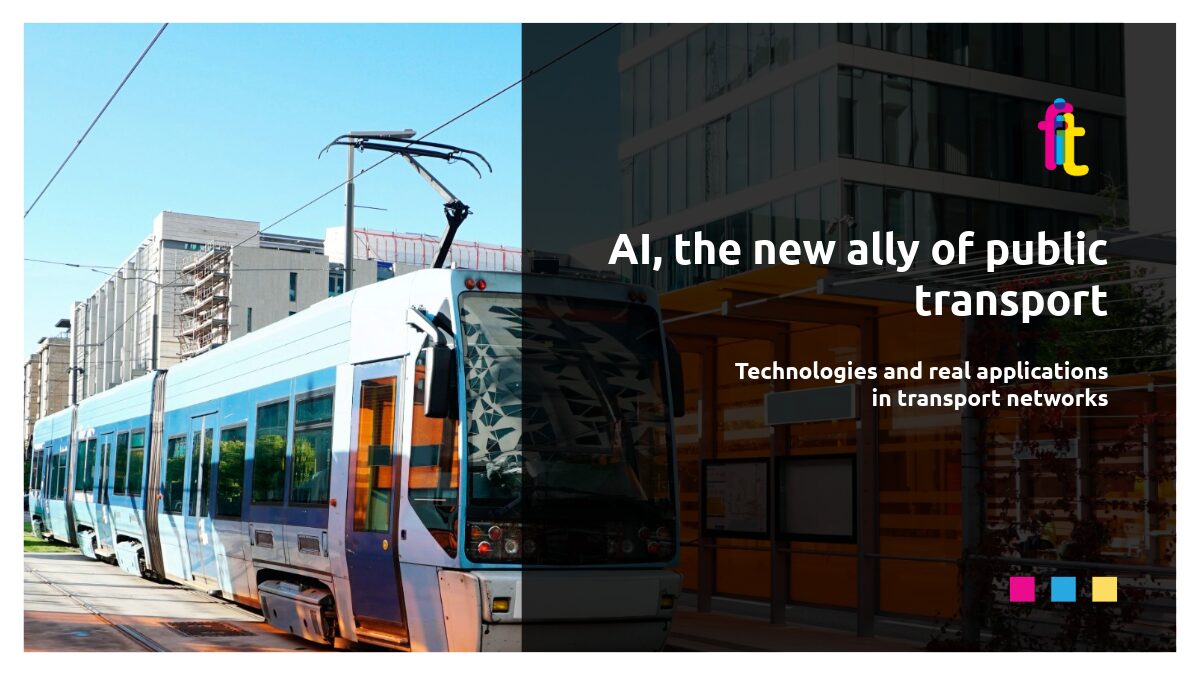
Technologies and real applications in transport networks
Artificial intelligence is becoming increasingly integrated into daily operations, and public transport is no exception.
According to the UITP Knowledge Brief and recent analyses on the digital transformation of mobility, AI is already producing measurable results in terms of accessibility, safety, service quality, and operational efficiency, thanks to the combined use of Large Language Models, video analytics, and predictive modeling.
From passenger information to safety: where AI is already changing public transport
In terms of passenger information, language models make communication more continuous and inclusive.
In Singapore, the digital avatar SiLViA translates voice and text announcements into sign language in real time.
In Switzerland, PostBus uses AI-based cloud systems to generate automatic multilingual announcements, dynamically updated according to planned or unexpected events.
In the United States, the Chicago Transit Authority has introduced an advanced chatbot capable of handling most passenger information requests, progressively expanding its content retrieval and generation functions.
In Italy, Velvet, an open-source chatbot for regional public transport, provides real-time information on timetables, service changes, and operating conditions, demonstrating how specialized models can strengthen the relationship between administrations, operators, and citizens.
At the same time, video analytics is transforming video surveillance into intelligent monitoring and decision support systems.
AI is used to detect driver fatigue, identify risky driving, monitor blind spots, and prevent accidents, as in Singapore’s bus fleets.
In other contexts, smart cameras help combat fare evasion in real time, as in Barcelona, or detect unauthorized intrusions in railway tunnels, as in trials by the New York Metropolitan Transportation Authority.
In Sofia, a “lightweight” computer vision model has been used to classify vehicle occupancy without additional sensors, indicating a scalable, low-impact approach to fleet management.
Governance and institutional capacity: what is needed to transform AI into structural benefits
Predictive modeling is one of the areas with the greatest strategic value: machine learning algorithms, powered by historical and real-time data, make it possible to anticipate critical events, optimize resources, and improve service reliability.
In Morocco, predictive systems have been used to optimize driving style by correlating telemetry with traffic, passenger load, and weather, resulting in significant reductions in fuel consumption and operational errors.
In Spain, AI-based platforms intelligently manage the recharging of electric bus fleets, reducing energy costs and extending battery life. In Hamburg, predictive traffic management software allows the impact of accidents and roadworks on the network to be estimated in advance and supports real-time operational decisions.
In these cases, AI ceases to be a simple, isolated application and becomes a set of tools integrated into complex digital ecosystems, based on large volumes of heterogeneous data and increasing interoperability between systems.
For public administrations and decision-makers, this evolution opens up opportunities and responsibilities in terms of governance, skills, and the regulatory framework.
The AI Act, which came into force in 2024, defines the scope of high-risk systems, including applications related to autonomous driving and traffic management, with requirements for security, transparency, and human oversight. This is complemented by the protections of the GDPR and European initiatives on common data spaces, which are essential for developing effective solutions that protect rights and trust in digital systems.
Transforming technology into structural benefits requires investment in data quality, training, and institutional capacity to govern complex systems. Without a clear strategy for integrating technology and planning, there is a risk of adopting advanced tools without being able to translate them into lasting benefits for local areas.
Source: https://datamobility.it/magazine/ai-al-servizio-del-trasporto-pubblico/