How We’re Winning the European Challenge
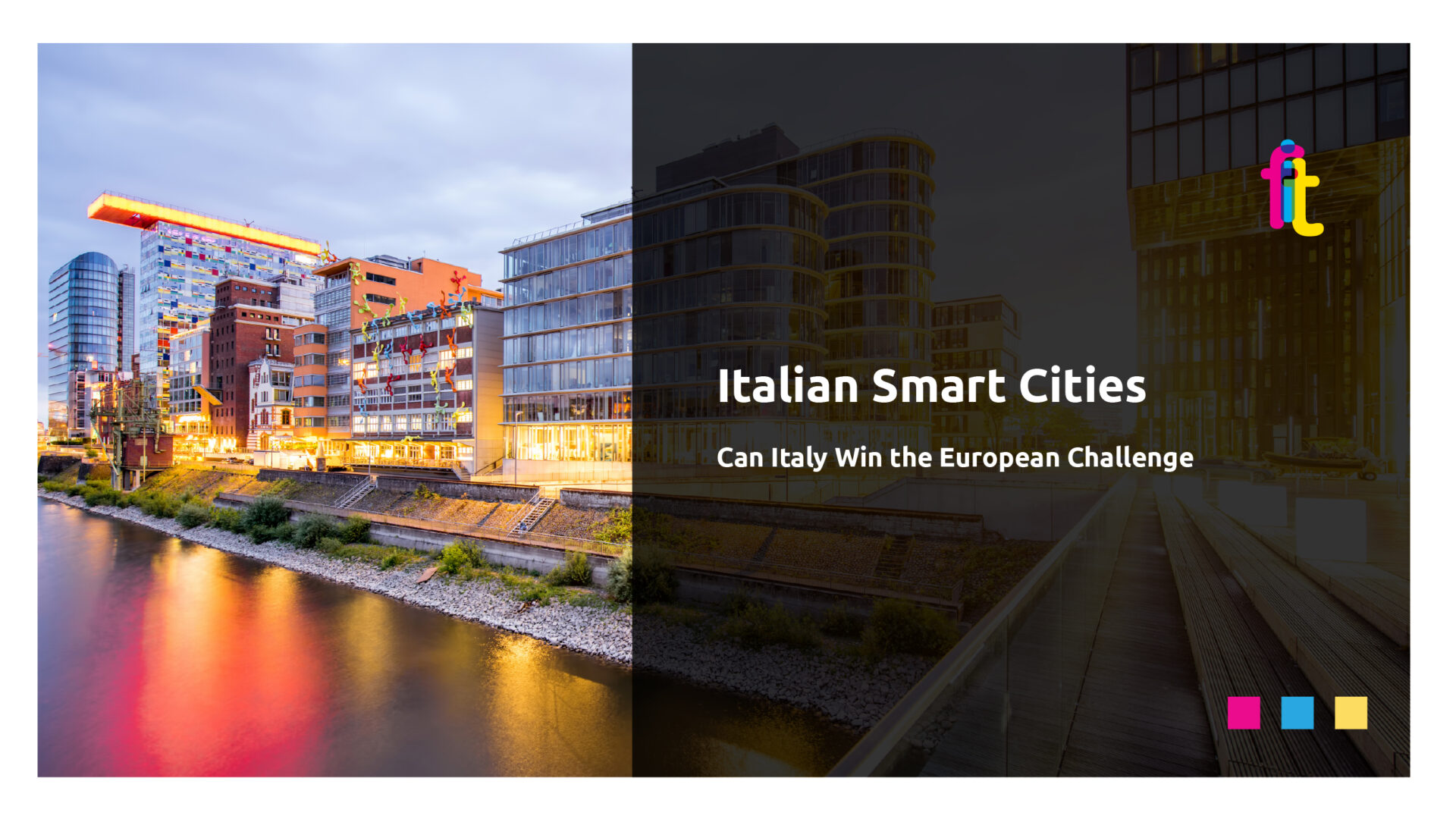
Italy is undergoing a quiet but revolutionary urban transformation. Our cities are proving that it is possible to combine technological innovation and environmental sustainability in a single functional ecosystem.
Fiber optics are no longer just a means of accessing the network, but the beating heart of a transformation that enables essential and innovative services, such as artificial intelligence and energy management.
This “invisible infrastructure” supports the development of smart energy communities and the integration of technologies into everyday urban management.
The Italian approach has also shown particular sensitivity to the issue of sustainability, even in small towns.
Pilot projects have shown that even smaller towns can be protagonists of change.
Treviso is the most shining example of this transformation.
The Venetian city won the European Green Leaf 2025 award, becoming the first Italian municipality with less than 100,000 inhabitants to receive this European recognition. This success is based on an integrated strategy that has increased separate waste collection from 86.8% and the number of homes connected to the sewer system from 30% to 70% thanks to micro-tunneling.
But the real innovation lies in the data-driven approach to urban planning, where the intelligent use of data accounts for 30% of the value of sustainable policies.
Palermo also offers another virtuous model of urban regeneration.
The only Italian city invited to the tenth European Conference on Sustainable Cities, it has developed ambitious projects to redevelop abandoned building complexes, from the former Manifattura Tabacchi to the former Fiera del Mediterraneo area.
The concept of the ‘city of augmented proximity’ realizes the vision of the fifteen-minute city, where all essential services are accessible on foot or by bicycle through a polycentric system of circular neighborhoods.
Sustainable mobility thus emerges as the common denominator of innovative strategies.
Verona’s GRIND project proposes a data-driven model for the long-term rental of e-bikes in industrial districts, demonstrating how light electric mobility can be transformed into mobility as a service.
The real challenge for sustainable smart cities lies in human skills and territorial governance.
Although infrastructure is increasingly available thanks to PNRR funds, the lack of technical skills is still the main obstacle. The transfer of know-how becomes strategic in order to exploit the potential of new technologies, transforming smart cities from an abstract goal into a concrete operational project.
The integration of urban sustainability and energy production finds an innovative solution in agrovoltaics, which can form a green belt to prevent uncontrolled urban expansion.
The 540 projects funded by the PNRR represent a concrete opportunity to experiment with this integration, connecting the urban and agricultural environments through the simultaneous production of food and clean energy.