

Available technologies, real limitations, and sustainable choices for fleets
Cold chain logistics cannot afford impulsive decisions.
Today, energy costs affect costs, service continuity, and competitive positioning.
The data and analyses presented at Zerogradi indicate that the transition in ATP transport must be seen as a progressive industrial choice, based on real numbers and operational profiles.
Old fleets and fragmented structure. The issue of renewal
The Interdisciplinary Observatory on Food and Drug Transport (OITAF) analyzed the ATP vehicle fleet using data from the General Directorate for Motor Vehicles.
For trailers and semi-trailers, the average age is 16.4 years, with significant regional differences: in the Northeast, it remains below 13.9 years, while in the South, where 44.8% of the ATP-towed fleet is concentrated, it reaches 17.4 years.
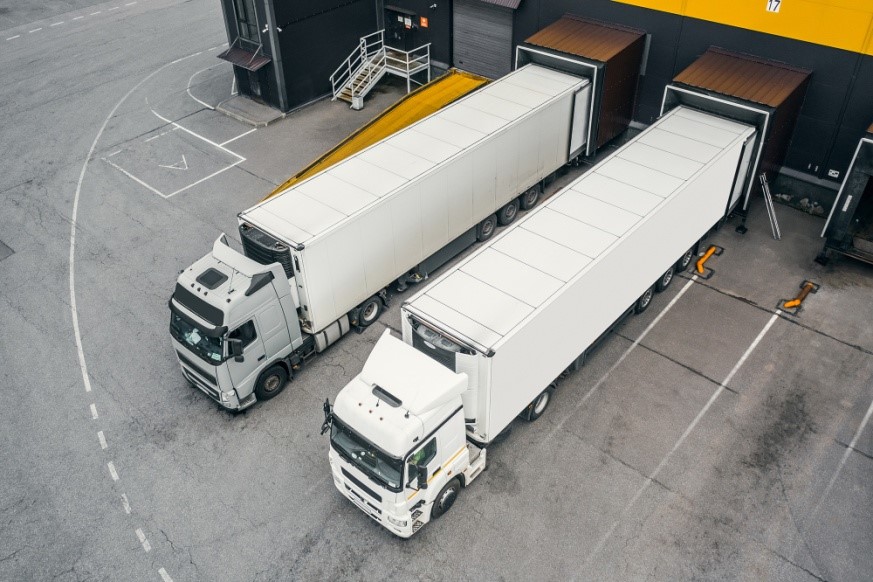
A significant part of the fleet consists of vehicles downgraded from ATP-certified refrigerated units to standard isothermal vehicles, suitable only for transport at temperatures of 0°C and above. This limits operational flexibility and prevents operators from accessing temperature-sensitive contracts, despite the availability of more fuel-efficient and lower-emission solutions on the market.
Over 60% of trailers belong to companies with only one vehicle, focused on production and marketing, which consider transport a necessary but not strategic function. There are only a few dozen large third-party fleets.
For those who manage ATP fleets, this situation means one thing: renewal must be planned according to sound economic criteria, taking into account the remaining useful life of the vehicles and their actual operational missions.
Energy options between bridge solutions and emerging technologies
In terms of advanced traditional fuels, biofuels are derived from biomass or waste materials, HVO, ethanol, and biogas fall into this category.
In Italy, 35% of methane for transport is already bio-based from waste materials, and the country has a negative CO2 balance.
Biomethane is therefore a good practice, especially when produced from organic waste and agri-food waste. Also waste biofuels can support decarbonization but are unlikely to cover the entire demand without resorting to primary agricultural production, which is considered less sustainable in the long term.
E-fuels, produced using renewable energy to generate green hydrogen and capture CO2, allow existing infrastructure to be used and, in some cases, enable fleets to be powered without substantial modifications to engines. They remain carbon-based fuels: combustion produces similar amounts of CO2 to fossil fuels, with neutrality referring to the overall cycle.
The well-to-wheel efficiency of engines powered by e-fuels is estimated at between 12 and 14%, and the technology is still at the demonstration stage.
Battery electric vehicles, catenary or dynamic charging systems, and hydrogen vehicles are cited as zero-emission solutions.
Several studies show that many vehicles could already be electrified today while complying with operational constraints, and that in urban and regional areas, battery vehicles could become cheaper in lifetime cost than diesel according to various estimates as early as 2025. Hydrogen offers ranges of over 800 kilometers and rapid refueling, but currently costs more than €10 per kilogram for green hydrogen, has limited overall efficiency, and faces infrastructure challenges.
For temperature-controlled logistics managers, the message is clear: the transition will be a combination of solutions.
Biofuels from waste and e-fuels can support a transition phase. Electric vehicles are already proving to be a viable solution for last-mile delivery and regional transport, whilst hydrogen remains, for the time being, a technology that is not yet widely feasible in practice.
Sources:
https://freightleaders.org/le-nuove-fonti-energetiche-nel-trasporto-a-temperatura-controllata/
https://www.adlog.it/news/trasporti-refrigerati-sfide-e-innovazione/