
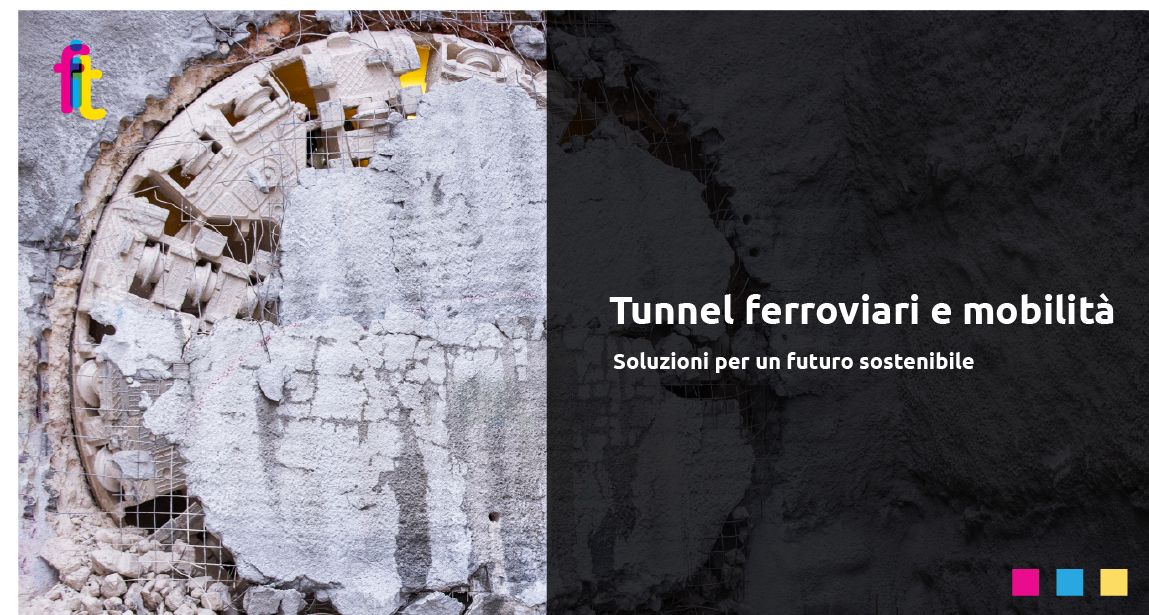
Rail tunnels and mobility: solutions for a sustainable future
From Switzerland to Japan, from Korea to Italy, railway tunnels represent some of the most extraordinary achievements of modern engineering. These works allow trains to cross seemingly insurmountable natural barriers, shortening distances and travel times even when it is necessary to dig through kilometres of rock beneath mountains thousands of metres high.
The future passes beneath the Alps: the Brenner Tunnel
The Brenner Base Tunnel, currently under construction beneath the Italian and Austrian Alps, is destined to become the longest underground railway tunnel in the world. Extending 64 kilometres, this work will revolutionise connections between Italy and Austria, drastically reducing travel time between Fortezza and Innsbruck: from the current 80 minutes to only 25 minutes, a reduction of 69%.
The impact on sustainable mobility will be significant. In a region already congested with freight and passenger traffic, this new rail link will offer an environmentally friendly and efficient alternative to road transport, contributing to the decarbonisation of European transport.
Gotthard: the engineering feat of the century
The Gotthard tunnel, opened in 2016, currently holds the world record with its length of 57 kilometres. This tunnel, which runs under 2300 meter high mountains, required the use of 4 million cubic metres of concrete – the equivalent of 84 Empire State Buildings – and is the result of decades of planning and construction.
The Swiss government’s goal was ambitious: to create a direct and fast link between Rome and Zurich, allowing trains to connect the two cities in just three hours. An achievement that shows how railway infrastructure can redraw the map of European mobility.
World records from Asia to Europe
The world panorama of railway tunnels offers extraordinary examples of innovation:
- The 53.9-kilometre-long Seikan Tunnel in Japan holds the depth record at 140 metres below sea level
- The 50.5-kilometre-long English Channel Tunnel, a symbol of European engineering, is the longest underwater section in the world
- The Yulhyeon Tunnel in South Korea allows high-speed trains to reach speeds of up to 300 km/h on an almost entirely underground line
Innovative technologies for complex challenges
The construction of these tunnels requires the use of the most advanced technologies. In the case of the Brenner Pass, the technique of freezing the ground with liquid nitrogen made it possible to stabilise particularly difficult areas wet by the waters of the Eisack river. This same technology was later applied in urban contexts, such as the M4 metro in Milan, where tunnels were excavated a few metres from the foundations of historic buildings.
Towards more sustainable mobility
Large railway tunnels are fundamental tools for the transition towards more sustainable mobility.
They make it possible to:
- Dramatically reduce travel times between major European cities
- Offer environmentally friendly alternatives to air and road transport
- Decongest existing road networks
- Connect regions previously separated by natural barriers
These infrastructures demonstrate how strategic investments in rail transport can radically transform mobility systems, contributing to the environmental sustainability and economic development objectives of the regions involved.
The future of European mobility also passes through these underground corridors that, metre by metre, are redesigning the geography of sustainable transport.