
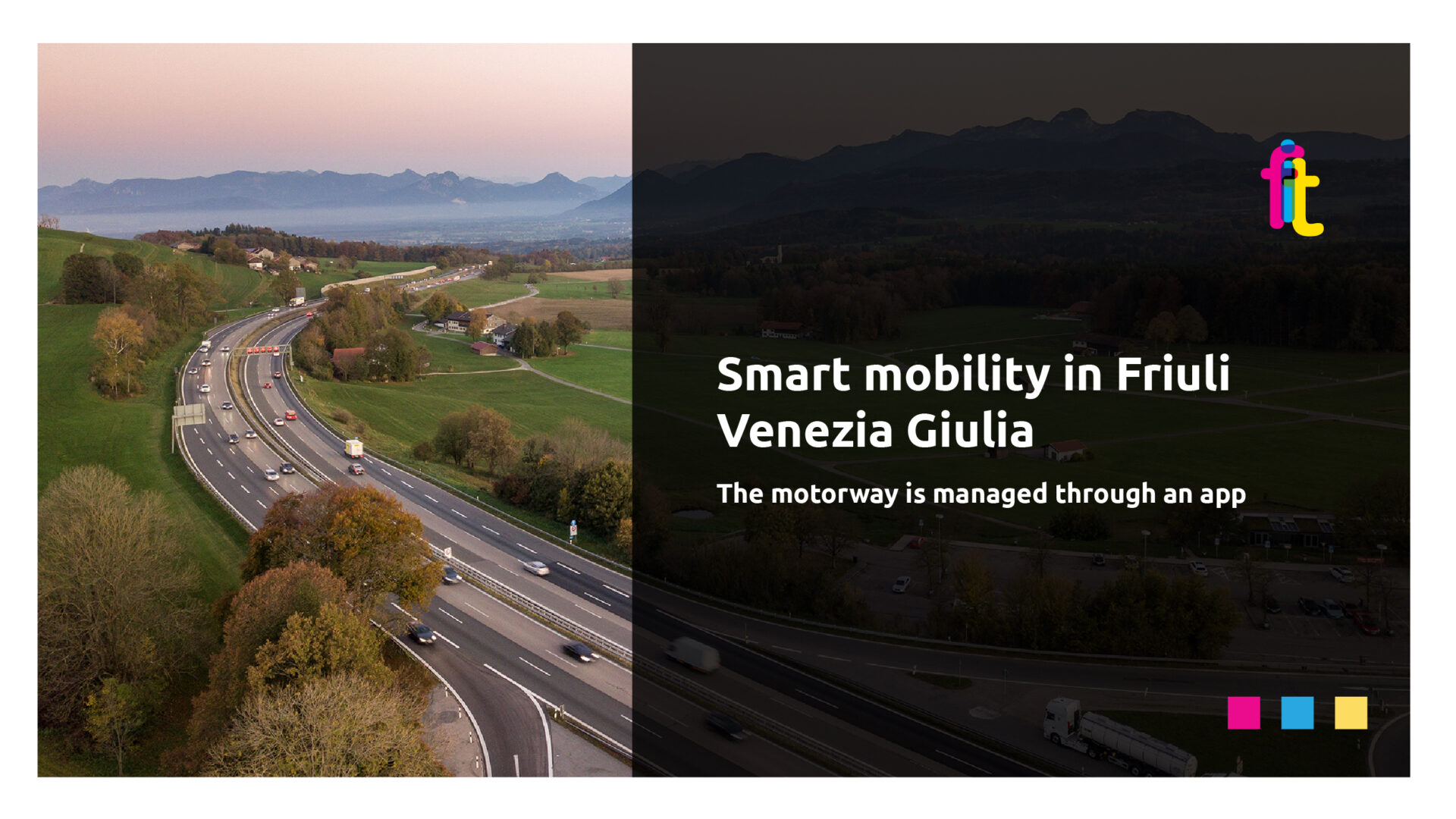
The motorway is managed through an app
No more running into traffic to close a motorway exit. Now it only takes a tap.
That’s the innovation coming from Friuli Venezia Giulia, where Autostrade Alto Adriatico has unveiled Italy’s first “smart” motorway—a project that takes a concrete step toward the digital transformation of the country’s road network.
Along the A4 Venezia–Trieste, operators can now activate signage and mobile panels remotely via smartphone to close or divert traffic during emergencies or roadworks. What once took up to an hour can now be done in just a few minutes.
It’s a silent revolution with a major impact: greater safety for road operators, who no longer need to step onto the carriageway, and more efficiency for drivers, with fewer disruptions and shorter waiting times.
Feasibility and replicability
This pilot doesn’t aim to turn the entire motorway into a futuristic corridor of sensors and algorithms. Instead, it seeks to make existing infrastructure smarter.
The real innovation lies in simplicity: a digital system that connects the road network to a mobile app, enabling quick, coordinated actions without risks or delays.
“This is a model that can easily be replicated on other stretches of motorway,” explain the engineers of Autostrade Alto Adriatico. “The goal is to drastically cut response times and ensure maximum safety for both travellers and road workers.”
The initiative in Friuli Venezia Giulia is part of a broader national trend. In Naples, the city’s ring road is also becoming a testing ground for AI-driven smart mobility, with sensors and real-time data used to dynamically regulate speed and smooth traffic flow.
Two different projects, yet guided by the same principle: making road infrastructure more connected, interactive, and safe.
Safety, efficiency, sustainability
The Friuli Venezia Giulia “smart motorway” shows how technology can enhance safety before convenience.
Every minute saved in managing an emergency means fewer risks, less congestion, and lower emissions. It’s a small step that points toward a new way of managing mobility: roads that communicate, adapt, and react in real time.
And perhaps that’s the real revolution: not building new roads, but making the ones we already have more intelligent.
https://www.udinetoday.it/cronaca/autostrada-smart-fvg-uscita-smartphone.html